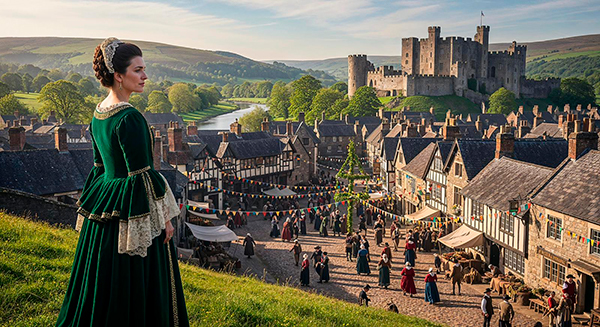
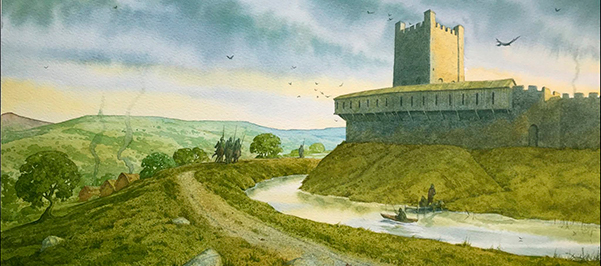
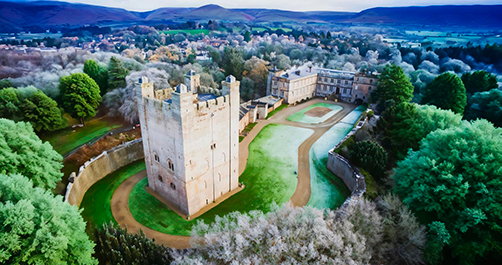
The Tales which make up the background story of the Towers of Eden revolve around four strongholds which have guarded the North East of what is now England since Roman times.
These four castles, of which only one is now inhabited, are each situated on dramatic positions along the route of the River Eden and the Ancient Roman road, and they form part of the protective curtain which guarded the entrance to the lakes and forests of what is now the Lake District.
This has always been an area rich in legend and history with which both legendary figures like Merlin, Talieson and King Arthur and historical figures like Emperor Hadrian and William Marshall have been associated.
You can visit each of the Towers.
Find out more by clicking on the following links for:
The Tower of Water, The Tower of Air, The Tower of Earth, The Tower of Fire
Visit each of The Towers of Eden.

for updates and announcements and to secure your copy of the Book as soon as it is delivered
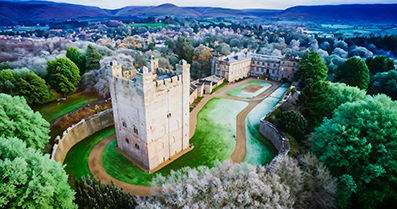
The Tower of Water rises above the waters of the River Eden, which makes a protective loop around the County Town across from the Roman Road leading to Luguvallium.
Founded on the site of a Roman signal station, the castle was built as a motte and Bailey in about 1092, whose wooden walls were replaced in stone over 12th and 13th Century. It is dominated by a square Keep which still overshadows the walls and now has water in part of its moats.
Under the Clifford’s the Castle was strengthened and its comfort improved until the time of Lady Anne who upgraded the buildings and built a new stable block in the outer bailey to match her almshouses in the town.
Lady Anne’s grandson the Earl of Thanet modernised the main building into a comfortable 17th Century house, which it has remained, being upgraded by successive owners up to the present day.
The Castle has a full and interesting history and impressive earthworks and grounds to visit if open. It plays a central role in the stories of The Towers of Eden as Lady Anne spent much time there.
Visit each of The Towers of Eden.


for updates and announcements and to secure your copy of the Book as soon as it is delivered
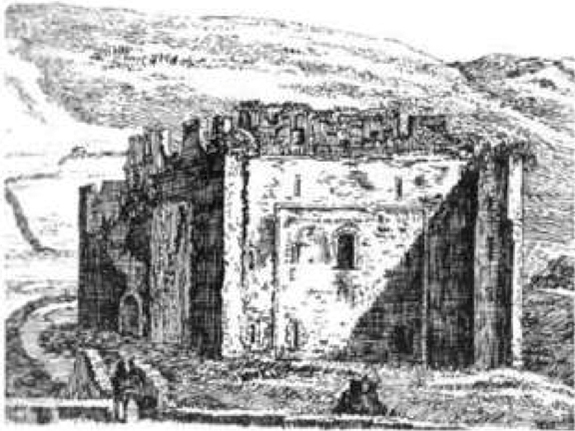
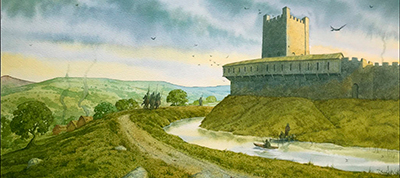
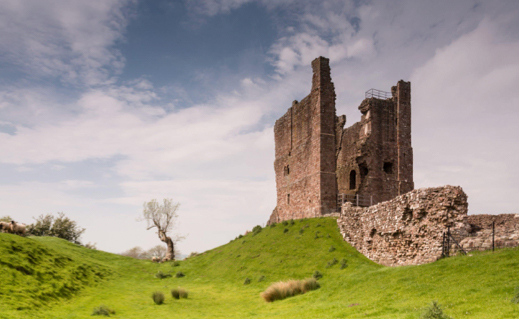
This Castle was also initially built in the Roman fort known as Verterae where the Roman Road to York starts to cross Stainmore.
It is marked by another great Norman keep which rises above the site providing views up and down the valley and must have been the tallest building for many miles when built. After the siege of 1174, which is mentioned in the book, the Keep and Castle were strengthened and was improved by the Crown and then the Clifford’s up until the time of Lady Anne.
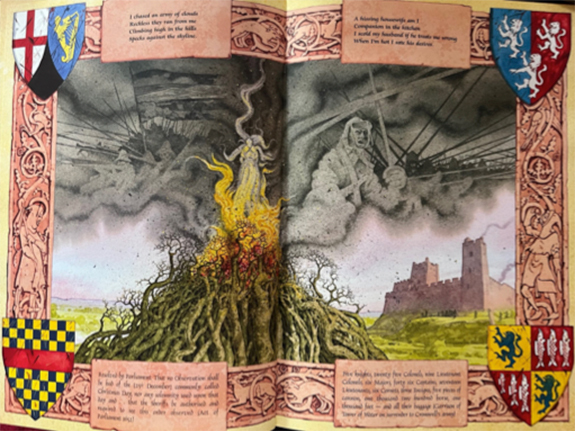
The Castle was twice burnt in fires, one of which followed the Christmas celebrations of the Shepherd Lord in 1521. After Lady Anne died the castle was stripped when her grandson decided to focus on the county town and used some of its materials to ugrade the Tower of Water.
A corner of the Keep collapsed in 1921. The Castle stands next to the village of Brough which was built at the same time with a separate market town being built along the road in later times.


Visit each of The Towers of Eden.

for updates and announcements and to secure your copy of the Book as soon as it is delivered
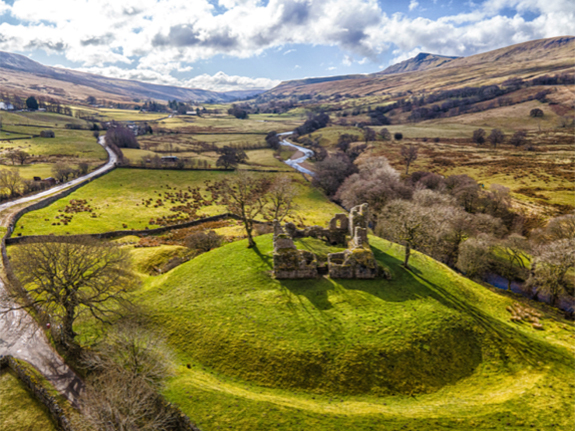
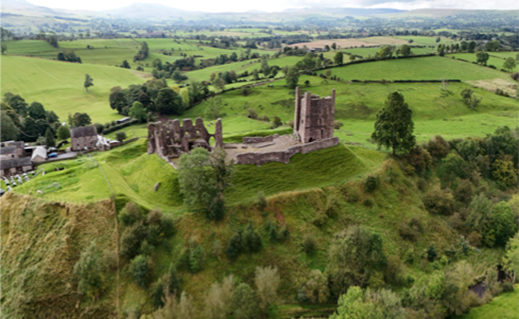
According to legend this small Tower was rumoured to have been founded by Uther Pendragon, but the earliest remains are the 12th Century Norman tower at the centre of its mound which was probably build be the Vipont family. The heiress Idonea de Vipont is known to have lived there and when she died it passed to the Clifford children of her sister Isabelle who thereby gained all of the Towers of Eden. The Clifford’s strengthened it but it was captured and burnt in the 14th Century by Scottish Raiders.
The castle is in an atmospheric site not far from the source of the Eden river where the valley is known as Mallerstang. The nearby hamlet called Outhgill contains a church which is associated with the castle.” Lady Annes Way” is the name now given to the old drover's path to the Eden valley which passes here having crossed the fells from Yorkshire.
The site is on private land but accessible, and is also known for having been owned by Sir Hugh de Morville, one of the knights who killed Thomas Becket, whose name survives on one of the surrounding peaks as Hughs Seat.


Visit each of The Towers of Eden.

for updates and announcements and to secure your copy of the Book as soon as it is delivered
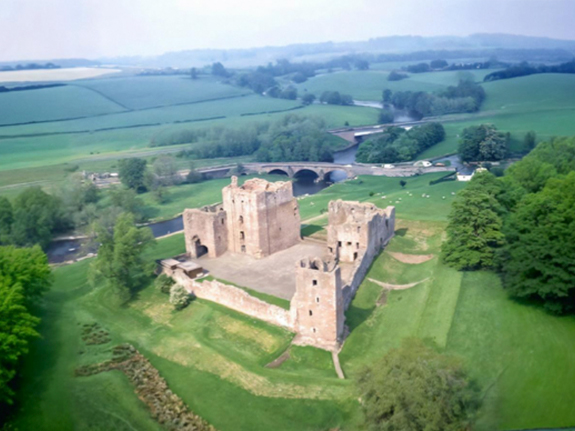
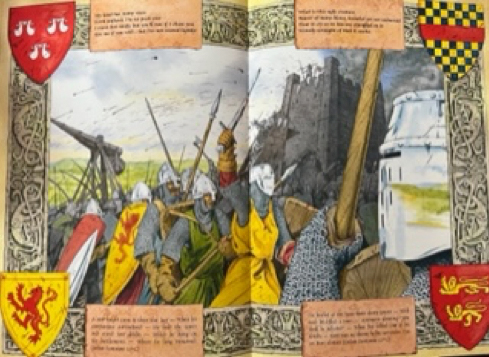
This Tower was also built in the corner of a Roman fort - the fort of Brocavum - and was expanded by the Clifford Wardens of the Marches into a considerable fortress around its Norman Keep.
Edward I stayed here when visiting his friend Robert Clifford on his way up to Scotland in 1300 and the Castle was eventually improved and developed into a comfortable and favoured residence of the Cliffords right up until Anne’s mother, Lady Margaret lived and died there in 1616. After Lady Margarets death it was visited by King James I on one of his journeys through Eden in 1617.
This Tower plays a considerable role in the story but after the death of Lady Anne it was also allowed to decay as the focus was on the Tower of Water.
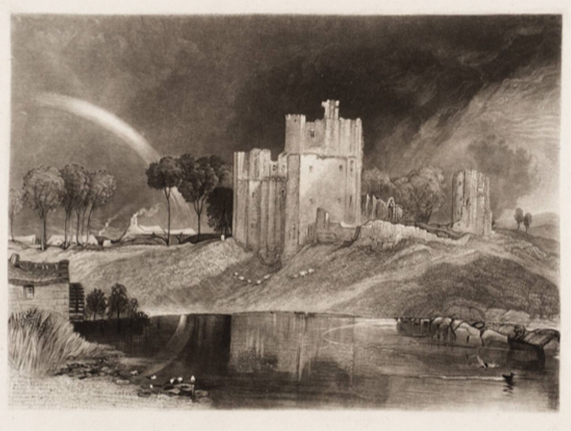
As it decayed in later years, the Tower was celebrated by the romantics appearing in the poetry of Wordsworth (in particular the poem “Song at the Feast of Brougham Castle upon the Restoration of Lord Clifford, the Shepherd, to the Estates and Honours of his Ancestors”) as well as several romantic paintings and prints, including a painting by J. M. W. Turner.


Visit each of The Towers of Eden.

for updates and announcements and to secure your copy of the Book as soon as it is delivered