Saint Oswald

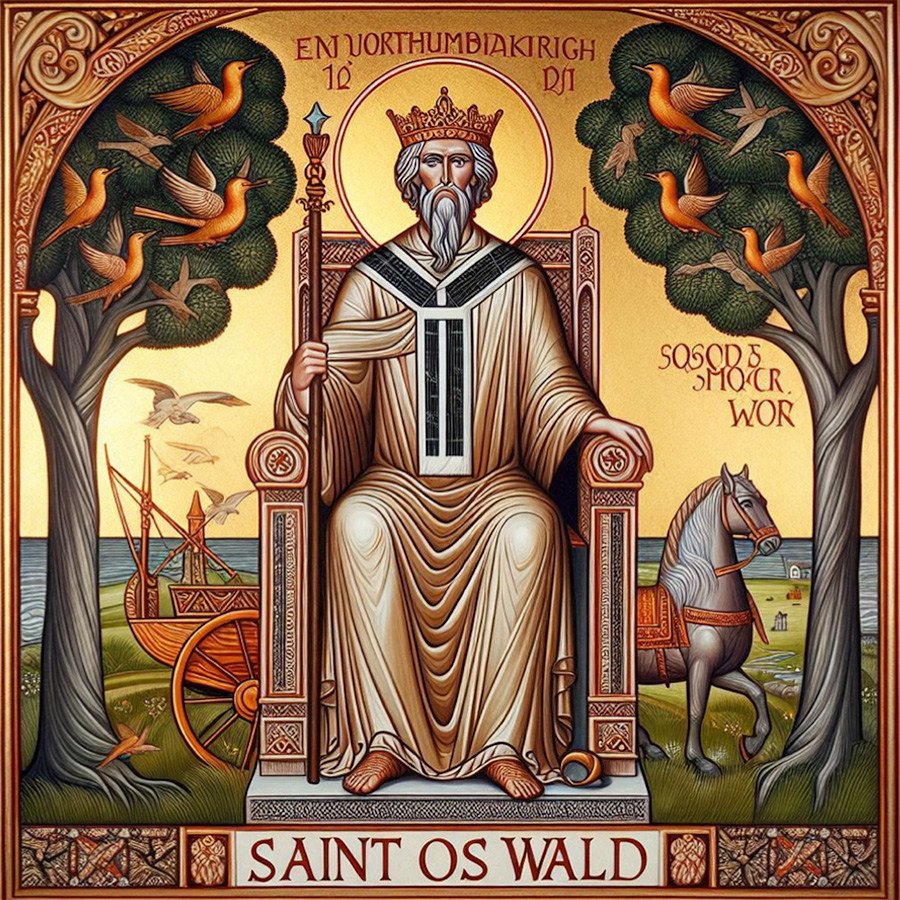
Saint Oswald was King of Northumbria from 634 until his death, and is venerated as a saint, whom there was a particular cult in the Middle Ages.

Oswald was the son of Æthelfrith of Bernicia and Acha of Deira and came to rule after spending a period in exile. After defeating the Welsh ruler, Cadwallon at the Battle of Heavenfield, Oswald brought the two Northumbrian kingdoms of Bernicia and Deira once again under a single ruler and promoted the spread of Christianity in Northumbria. He was given a positive assessment by the historian Bede, who regarded Oswald as a saintly king, writing a little less than a century after Oswald's death; it is also Bede who is the main source for present-day historical knowledge of Oswald. After eight years of rule, in which he was the most powerful ruler in Britain, Oswald was killed in the Battle of Maserfield while fighting the forces of Penda of Mercia, who then himself was defeated by Oswald's brother Oswiu.

After Oswalds death at Maserfield in 642 he quickly became a saint, not just because of his matrydom but also because he was a good man (and had supported and spread Christianity gently during his reign). Miracles were ascribed to the place where he died, and his remains, which has been hewn into several pieces, became valuable relics. Ironically, he became particularly venerated in Gloucester, formerly in Mercia, the country responsible for his death.

In the world of the Towers of Eden he was remembered for his benevolent rule – as well as the exile of his early years when, according to our story, he came to find the sanctuary of Eden and its holy men and spectral women.
Sign up to our newsletter

for updates and announcements and to secure your copy of the Book as soon as it is delivered

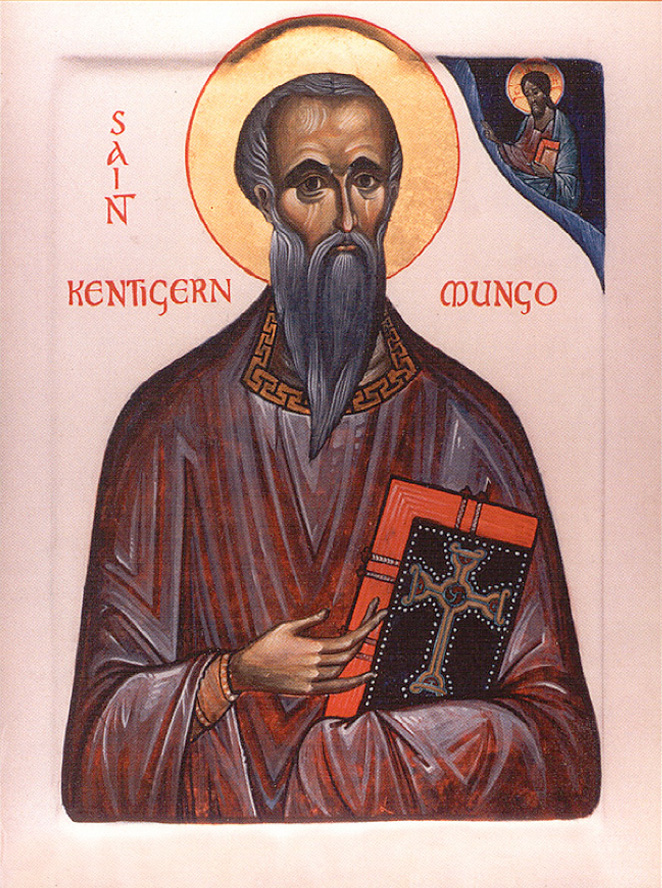
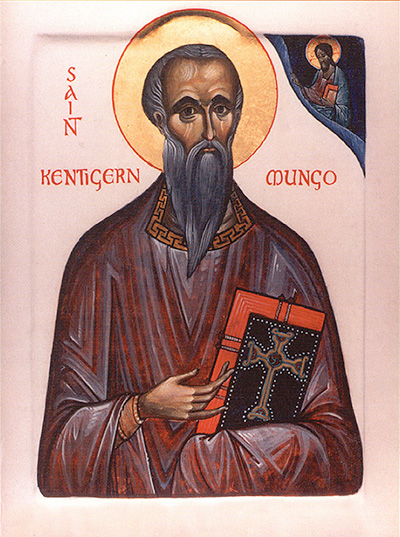
Saint Kentigern

Saint Kentigen was rumoured to have been the son of Owain and grandson of Urien of Rheged, being born illegitimately in Strathclyde and discarded by his maternal godfather in the late sixth century.

He was brought up and trained by St Serf and travelled widely in his early life as the time of Christianity ebbed and flowed in the region. He finally settled in what is now Glasgow where he is known as Saint Mungo. He established the Christian community there and lived to an old age, but his memory was still kept and treasured in Eden where he came in his earlier days, perhaps escaping persecution by pagan King Morken.

In the world of the Towers of Eden Kentigern passed through Eden on his way to see Saint David in Wales and left inspiration and calm in his wake, helping to ensure that peace was maintained regardless of the more brutal regime in northern Strathclyde.

Sign up to our newsletter

for updates and announcements and to secure your copy of the Book as soon as it is delivered

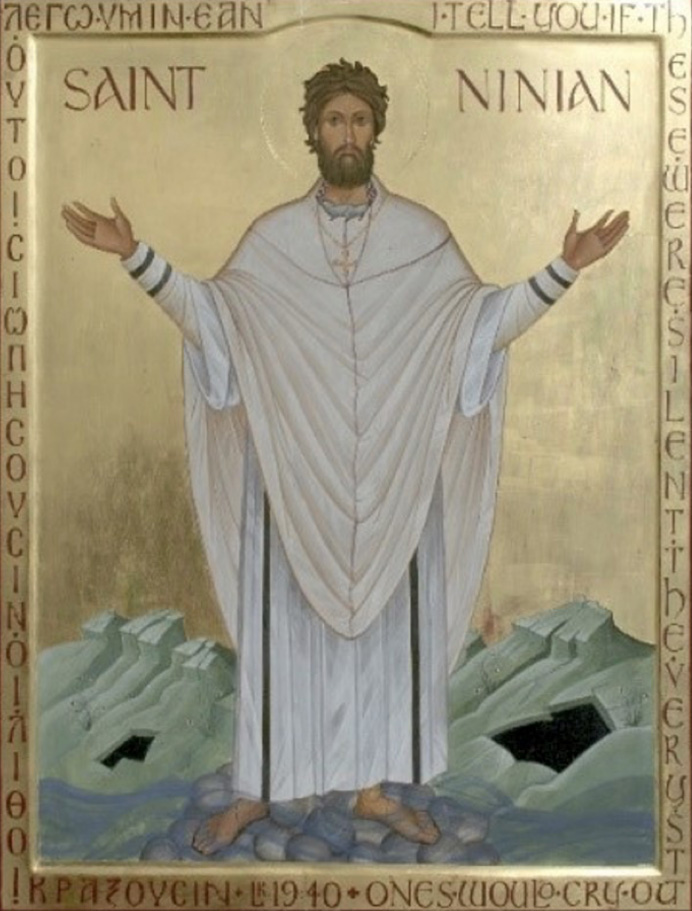
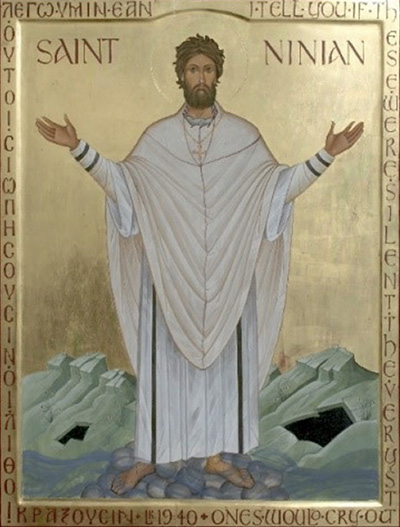
Saint Ninian

Saint Ninian is another early dark age saint, reputed to have died in about 432 and to have founded the “Candida Casa” white house monastery at Whithorn in Galloway – he is also sometimes known as “the Apostle of the Southern Picts”.

His message and influence also reached down to Eden, at least in medieval times, and his example of being able to stand firm and built in a hostile place inspired many.

This is how Ninian is known and respected in the world of The Towers of Eden, a steadfast supporter of peace and calm in a blood soaked time, who protected Eden and its people with his example.

Sign up to our newsletter

for updates and announcements and to secure your copy of the Book as soon as it is delivered

Saint Cuthbert and Saint Herbert

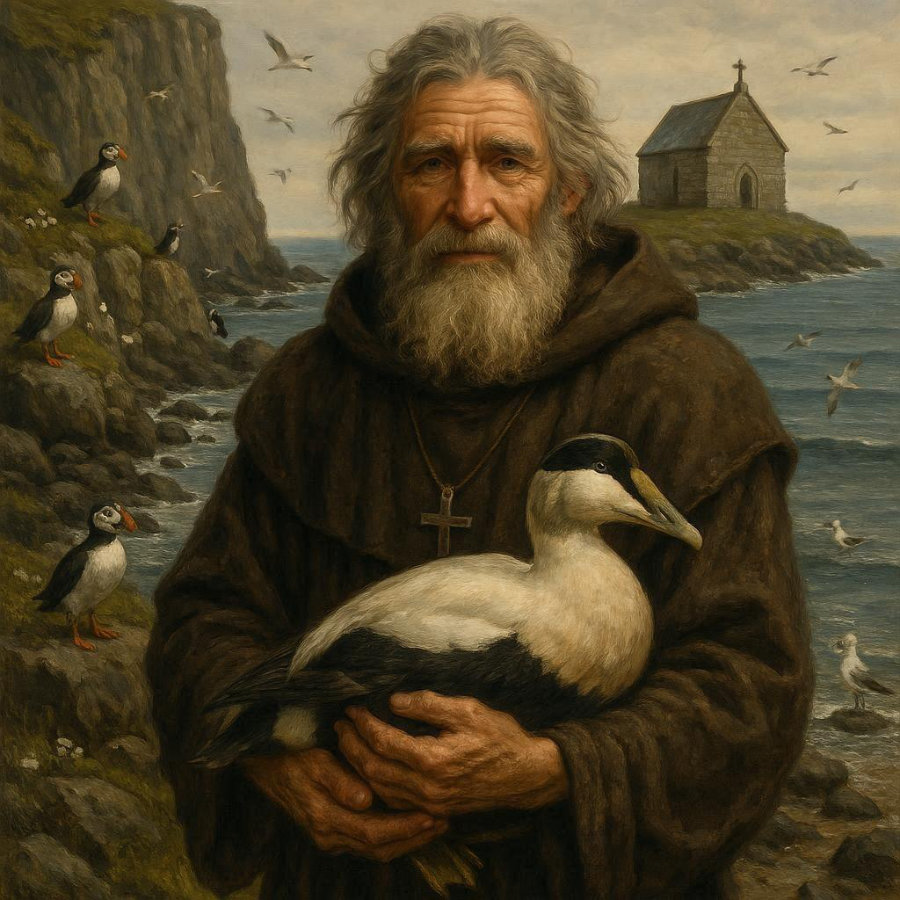
Saint Herbert and St Cuthbert were spiritual brother saints, one of whom sought peace on a remote island in one of the lakes of Eden, and the other, more famous, sought peace in the Lindisfarne Islands off the Northumbrian Coast. Both men were known for their wisdom. piety and simplicity and sought to avoid the pressures and temptations of the world by becoming hermits and dedicating their lives to God.

Cuthbert started life in Northumbria at a time when there was tension between Celtic and Roman Christianity and Christianity was not firmly established in the North. As a young man he was a tireless traveller spreading his message widely and becoming popular with people across the North for his pleasant personality, humility and wisdom, reaching both those in rural villages and the homes and palaces of royalty and nobility, but preferring austerity and living as a hermit when he could. His simplicity together with his charm and generosity to the poor, and his reputation for gifts of healing and insight led many people to consult him, gaining him the name of "Wonder Worker of Britain”.

Herbert was one of Cuthbert’s followers and disciples and is said to have visited Cuthbert at Lindisfarne every year for spiritual guidance after Cuthbert advised him to live as a hermit on a remote Island in Eden. In AD 686 Herbert went to see Cuthbert in Carlisle and on learning that Cuthbert foresaw his death prayed that he might die on the same day. This prayer was granted and both Cuthbert and Herbert died on the same day, 20 March 687.

In the Tales of The Towers of Eden Cuthbert and Herbert are two of the Saint Champions of Eden, whose piety and example helped to comfort and calm the folk of Eden in those difficult times.

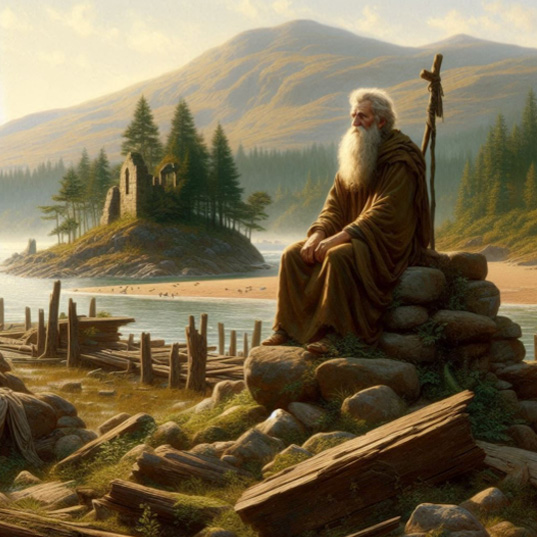
IF thou in the dear love of some one Friend Hast been so happy that thou know’st what thoughts Will sometimes in the happiness of love Make the heart sink, then wilt thou reverence This quiet spot; and, Stranger! not unmoved Wilt thou behold this shapeless heap of stones, The desolate ruins of St. Herbert’s Cell. Here stood his threshold; here was spread the roof That sheltered him, a self-secluded Man, After long exercise in social cares And offices humane, intent to adore The Deity, with undistracted mind, And meditate on everlasting things, In utter solitude.– But he had left A Fellow-labourer, whom the good Man loved As his own soul. And, when with eye upraised To heaven he knelt before the crucifix, While o’er the lake the cataract of Lodore Pealed to his orisons, and when he paced Along the beach of this small isle and thought Of his Companion, he would pray that both (Now that their earthly duties were fulfilled) Might die in the same moment. Nor in vain So prayed he:–as our chronicles report, Though here the Hermit numbered his last day Far from St. Cuthbert his beloved Friend, Those holy Men both died in the same hour.

William Wordsworth: For the Spot where the Hermitage stood

Sign up to our newsletter

for updates and announcements and to secure your copy of the Book as soon as it is delivered

St Bega

Saint Bega or St Bee is the semi mythical Saint commemorated at the Priory of St Bees on the Coast of Eden.

According to the 13th Century Life of Saint Bega (which was kept at nearby Holmcultram Abbey), Bega was an Irish princess who fled Ireland to avoid marriage to a Viking chief, seeking to protect her virtue. She landed on the coast of Eden and lived as a holy woman by a small chapel on the coast. Eventually, fearing the marauding Viking pirates she moved inland leaving her bracelet behind her. Her bracelet became an object of veneration in the later Benedictine monastery, and several miracles were attributed to her, securing her position as a minor Saint.

More recent analysis indicates that, whilst there was probably a pre conquest church at St Bees, at which an ancient bracelet may have been venerated, it might have been a cult Centre for one of the pre-Christian goddesses, or even the bracelet itself.

The well-known modern author Melvyn Bragg wrote his own interesting account of St Bega in his novel “Credo” - another one for the Towers of Eden reading list.

In the world of The Towers of Eden, Bega was a Christian Irish princess who fled persecution, but in our story rather than leaving St Bees for Northumberland she found her way to the spectral ladies after leaving her chapel and was welcomed to become one of them and live near the Secret of Eden.

Sign up to our newsletter

for updates and announcements and to secure your copy of the Book as soon as it is delivered